Fasteners used in oil and gas applications can face conditions that go well beyond ordinary corrosion. When hydrogen sulfide, or H₂S, is present, selecting the wrong material can lead to cracking and unexpected component failure.
That is where NACE MR0175 comes into play.
For engineers and buyers specifying bolting for sour service environments, understanding NACE MR0175 can help ensure that the material, hardness, heat treatment, and service conditions are appropriate for the application.

Offshore oil and gas operations illustrate the demanding environments in which material selection matters.
NACE MR0175, also known as ISO 15156, provides requirements and recommendations for selecting metallic materials used in H₂S-containing environments in oil and gas production and natural gas treatment.
The standard addresses several forms of cracking associated with hydrogen sulfide exposure, including sulfide stress cracking, stress corrosion cracking, and hydrogen-related cracking.
For fasteners, this means material selection cannot be based on alloy name or strength alone. The condition of the material and the environment in which it will operate also matter.
“Sour service” generally refers to oil and gas environments containing hydrogen sulfide.
H₂S can create conditions that make certain metals more susceptible to cracking, particularly when tensile stress is present. A fastener may appear suitable based on its strength and corrosion resistance, but high hardness or an unsuitable material condition can increase its susceptibility to cracking in a sour environment.
This is why sour service applications require a closer look at material properties than many standard bolting applications.
Hardness is one of the most important considerations when selecting fasteners for sour service.
Higher-strength fasteners are often produced through heat treatment that increases hardness. In certain H₂S environments, however, excessive hardness can increase susceptibility to sulfide stress cracking.
As a result, NACE MR0175 places restrictions on the hardness, heat treatment, and condition of various materials.
A buyer should not assume that a particular alloy automatically meets NACE requirements. Two fasteners made from the same nominal alloy may not both be suitable if their hardness levels or processing histories are different.
There is no single “NACE material” that works for every sour service application.
Material suitability can depend on factors such as:
Carbon and low-alloy steels, stainless steels, nickel alloys, and other corrosion-resistant alloys may all be considered depending on the application and exposure conditions.
ISO 15156 separates requirements for carbon and low-alloy steels from those covering corrosion-resistant alloys and other alloys.
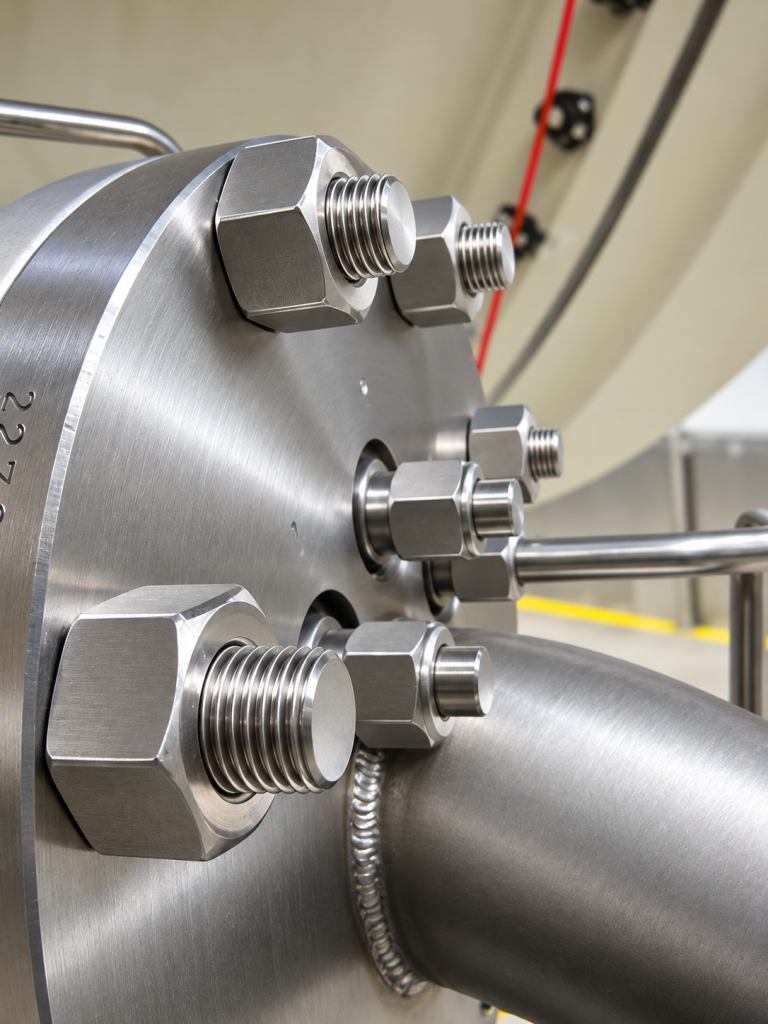
Bolted flange connections highlight why fastener specifications should address material grade, hardness, and service conditions.
When a drawing, specification, or purchase order calls for NACE MR0175 compliance, buyers should provide as much application information as possible.
Simply requesting an alloy such as 316 stainless steel, Duplex stainless steel, Inconel®, Hastelloy®, or another corrosion-resistant material may not be enough to determine whether the fastener is suitable.
Important information can include the required material specification, grade, hardness limits, heat treatment requirements, operating conditions, documentation requirements, and any project-specific restrictions.
Clear specifications help the supplier identify the appropriate material condition and determine what supporting documentation is required.
Material verification is especially important in demanding oil and gas applications.
Mill test reports can provide information such as chemical composition, mechanical properties, heat numbers, and material traceability. Depending on the project, additional testing or certification may also be required.
Buyers should confirm documentation requirements when placing the order rather than waiting until the material is ready to ship. This helps prevent delays and ensures the supplied fasteners can be properly matched to the project specification.
Another important distinction is that NACE MR0175 is specifically focused on materials used in H₂S-containing oil and gas production environments.
It is not a general corrosion-resistance specification, and it does not replace the applicable ASTM, ASME, engineering, or project specifications governing the fastener itself. The standard supplements other material and design requirements rather than replacing them.
Applications in refining and other downstream environments may also fall under different requirements.
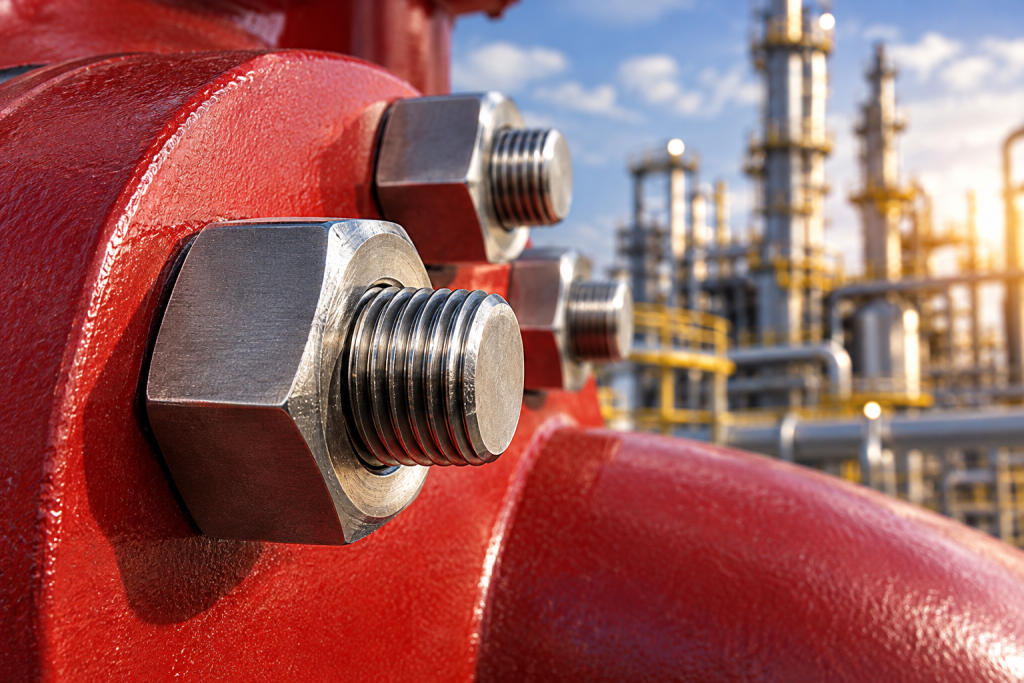
Fastener suitability depends on the complete combination of material condition, mechanical requirements, and environmental exposure.
Sour service fastener selection requires more than choosing a corrosion-resistant alloy from a list.
Engineers and purchasing teams should consider the complete combination of material grade, hardness, heat treatment, environmental exposure, mechanical requirements, and documentation.
When NACE MR0175 or ISO 15156 is specified, communicating those requirements early in the purchasing process can help avoid material substitutions, compliance issues, and project delays.
Nickel Systems supplies specialty fasteners and corrosion-resistant materials for demanding applications. Our team can help review your material and specification requirements and source fasteners that meet the needs of your project.
Contact Nickel Systems to discuss your fastener requirements or request a quote.